Centralized Visibility: The Key to Multi-Market Customer Acquisition
Why Growing Across Markets Demands a Single View
Expanding a business into new geographic regions or customer segments sounds straightforward. Open a new office, run some ads, hire local salespeople, and watch revenue grow. In practice, multi-market customer acquisition quickly becomes a tangle of disconnected campaigns, inconsistent messaging, and blind spots that waste time and money. The companies that succeed are not necessarily the ones with the biggest budgets. They are the ones that achieve centralized visibility across all their acquisition channels.
Centralized visibility means that every person involved in bringing in new customers - from marketing managers to sales reps to regional directors - can see the same data, at the same time, in a format that makes sense. Without it, each market tends to build its own version of the truth. One region reports strong lead generation, while another complains about poor lead quality. Neither side can explain why, because they are looking at different metrics pulled from different tools.
What Centralized Visibility Actually Looks Like
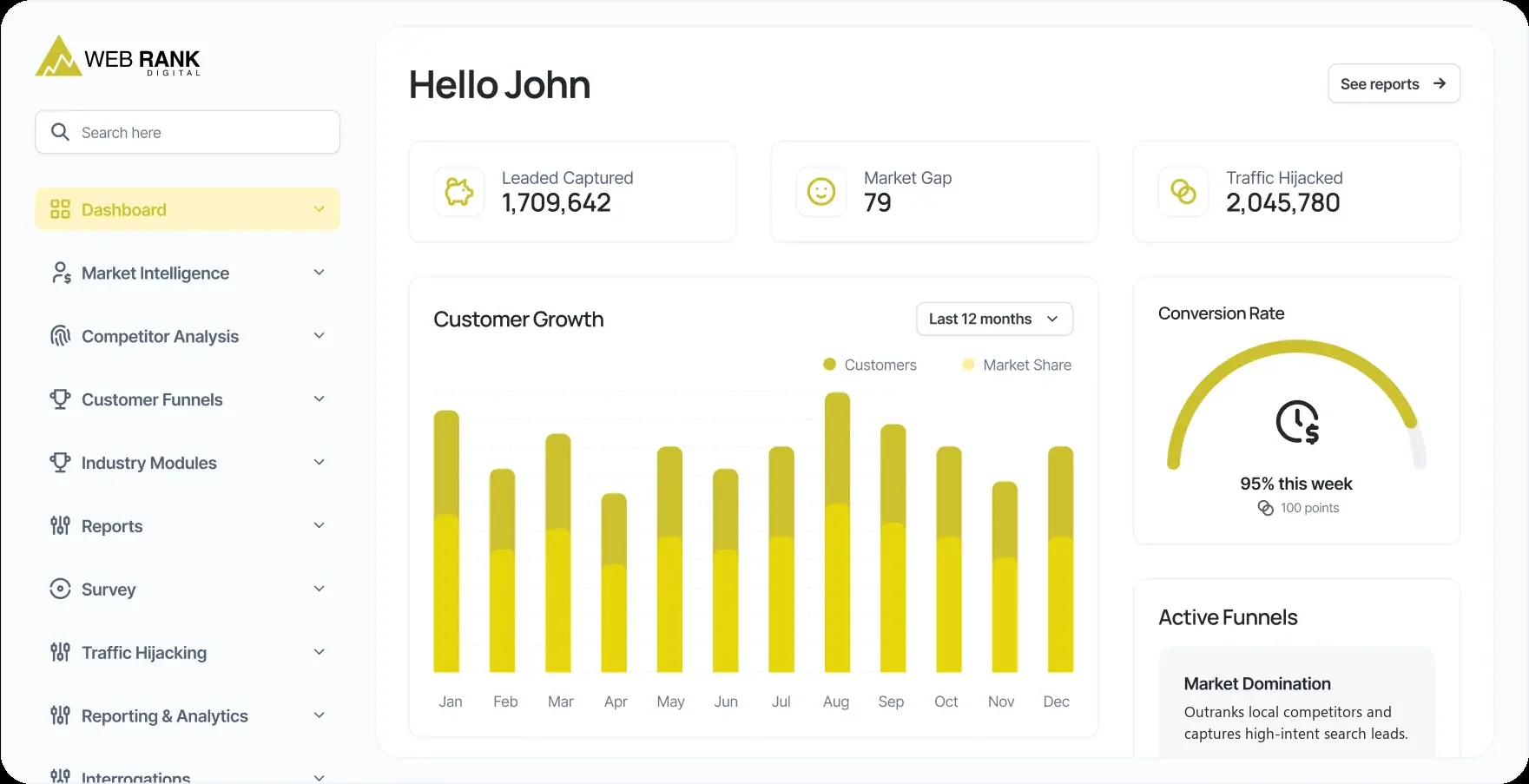
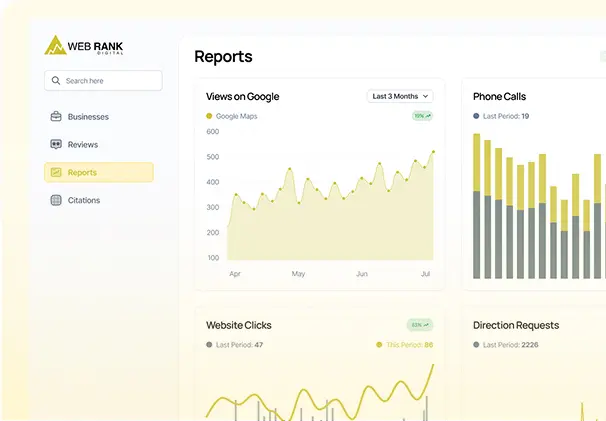
Think of centralized visibility as a single dashboard that pulls together every signal that matters for customer acquisition. It includes lead sources, campaign performance, conversion rates, cost per lead, and follow-up activity across all locations. Instead of logging into five separate platforms to check on each market, a team sees everything in one place. This does not mean micromanaging every local decision. It means having a reliable baseline so that when a market underperforms, the team can spot the problem quickly and decide whether to adjust the local strategy or apply a lesson learned elsewhere.
For example, a business running paid search campaigns in three different states might find that one state has a much lower cost per lead. Without centralized reporting, the marketing team might assume the local agency there is simply better. With a unified view, they might discover that the same keyword performs differently in each region because of local search volume or competitor activity. That insight allows them to reallocate budget intelligently rather than guess.
The Cost of Fragmented Acquisition
When each market operates in its own silo, problems multiply. Duplicate efforts become common. Two regions might independently build the same landing page template, while a third region ignores a proven approach because nobody shared the results. Campaign consistency suffers, and the brand message becomes diluted. Prospects in one city might see a polished, professional offer, while those in another see a poorly targeted ad with a different tone. That inconsistency erodes trust and makes it harder to scale.
Another hidden cost is missed opportunities. A lead that fits the ideal customer profile for one region might be ignored because the local team is focused on a different segment. Without centralized visibility, that lead falls through the cracks. The business loses a sale not because the product was wrong, but because the data was not connected.
How Centralized Visibility Enables Scalable Workflows
Scaling customer acquisition across multiple markets requires predictable, repeatable processes. Centralized visibility makes this possible by letting teams standardize the best performing workflows without forcing every market to operate identically. A central team can define the core funnel stages, the key lead qualification criteria, and the essential follow-up cadence. Local teams can then adapt the execution to fit regional demand and cultural norms while still reporting into the same system.
This approach also helps with location targeting. When a business knows which channels drive the highest quality leads in each region, it can allocate resources more precisely. Instead of running the same national campaign and hoping it works everywhere, teams can tailor offers, ad copy, and landing pages to local preferences. The centralized dashboard makes it easy to compare results side by side and decide where to invest next.
Many businesses turn to customer acceleration software to manage this complexity. The right platform consolidates data from multiple acquisition channels, automates routine tasks like lead routing and follow-up reminders, and provides real time visibility into performance. It replaces the manual process of exporting spreadsheets and reconciling different data sources. Instead, teams work from a single source of truth that updates automatically.
For companies evaluating their options, a platform like webrankdigital.com offers a practical starting point. It combines market intelligence, competitor analysis, automated funnels, and lead tracking in one system, which is exactly the kind of unified view that multi-market operations need.
What This Means for Your Team
Adopting centralized visibility is not just a technology decision. It changes how teams collaborate and make decisions. Regional managers need to trust that the data they see is accurate and that their local insights are visible to the central team. Leadership needs to resist the temptation to micromanage every local variation. The goal is alignment, not control.
One practical step is to define a common set of metrics that every market reports on, such as cost per lead, lead to opportunity conversion rate, and time to first contact. These should be measured consistently across all channels. Once those baselines are established, the team can start looking for patterns. Which types of campaigns perform best in each market? Which lead sources produce the most revenue? Where is the pipeline weakest?
Another benefit is faster iteration. When a tactic works in one region, the central team can test it in another market within days, not months. The centralized view shows whether the same approach translates or needs adjustment. Over time, this creates a library of proven strategies that the whole organization can draw from, reducing the guesswork involved in entering new territories.
Centralized visibility also improves accountability. When every market's numbers are visible to the broader team, it becomes harder to hide underperformance behind excuses. At the same time, it makes success visible too. A regional team that finds an innovative way to generate leads can share that insight with everyone, raising the overall capability of the business.
Common Pitfalls to Avoid
Implementing centralized visibility is not without challenges. One common mistake is trying to track too many metrics at once. Teams should start with the five to seven metrics that directly impact revenue and customer acquisition cost. Adding too many irrelevant data points creates noise and makes the dashboard harder to use.
Another pitfall is neglecting data quality. If different markets enter data inconsistently, or if some channels are not tracked at all, the centralized view will be misleading. It is worth investing time upfront to standardize how data is captured, even if that means adjusting current processes. Clean data is the foundation of any useful dashboard.
Finally, teams sometimes assume that centralized visibility means centralizing all decisions. That is not the case. The goal is to give local teams the information they need to make better decisions, not to take decisions away from them. A well designed system provides visibility without bureaucracy.
Making the Shift Practical
For most businesses, the move to centralized visibility happens in stages. Start by auditing the current state. Which tools are being used in each market? What data is already being collected? Where are the biggest gaps? From there, identify one or two key metrics that would have the most impact if they were visible across the organization. Build a simple dashboard around those metrics and share it with all stakeholders.

As the team becomes comfortable with that level of visibility, expand to additional metrics and integrate more channels. The key is to show early wins so that people buy into the approach. A team that sees how centralized reporting helped them reallocate budget and improve results will be more willing to adopt the next phase of the rollout.
Platforms that specialize in customer acceleration software, such as webrankdigital.com, are designed to support this kind of phased implementation. They offer flexible data integration, automated reporting, and the ability to customize views for different roles. That means each market can still work in a way that suits its local conditions, while contributing to a shared understanding of performance across the whole business.
Final Perspective
Multi-market customer acquisition does not have to be chaotic. The businesses that grow most efficiently are the ones that invest in visibility first. They know that seeing the whole picture is the only way to make smart trade offs between markets, channels, and campaigns. Centralized visibility does not guarantee success, but it removes the guesswork that so often slows growth. It turns acquisition from a series of isolated experiments into a coordinated, learnable discipline. For any company serious about expanding its reach, building that single view is not a nice to have. It is the foundation everything else depends on.